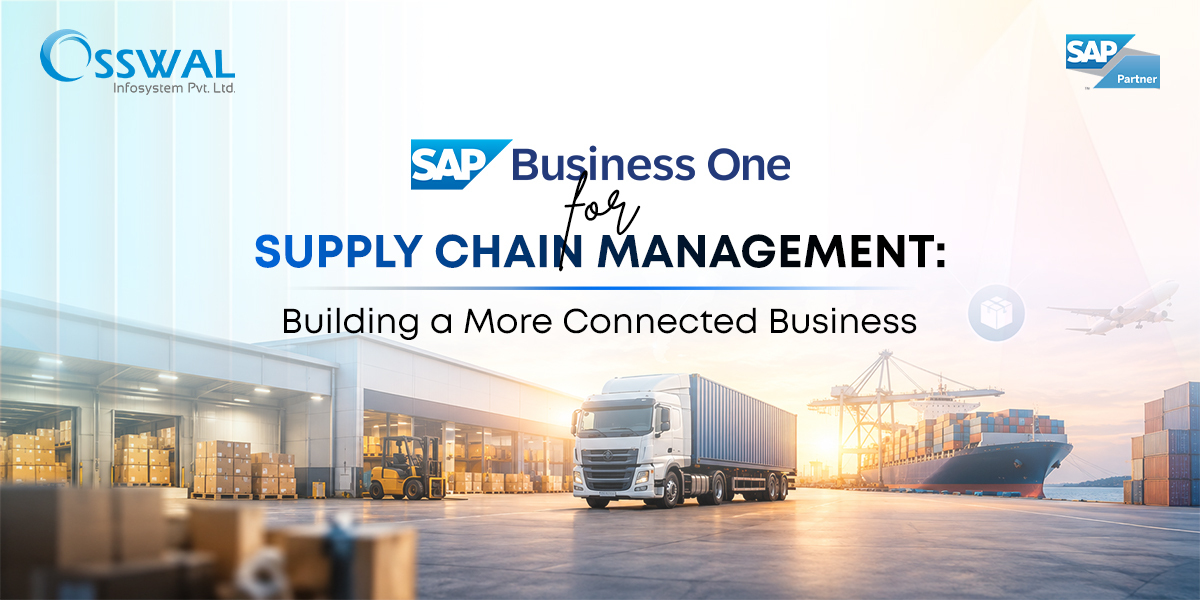
SAP Business One for Supply Chain Management: Building a More Connected Business
Supply chains connect suppliers, warehouses, production teams, sales channels, and customers. However, disconnected systems can make this network difficult to manage. SAP Business One helps businesses bring key supply chain activities into one connected business environment. It gives teams better access to data, improves coordination, and supports faster decisions.
For growing companies, supply chain management requires more than tracking products. Businesses also need to manage purchasing, inventory, production, sales, logistics, and customer demand. Therefore, an integrated ERP system can help create better visibility across these processes.
Why Supply Chain Visibility Matters
Modern supply chains can involve many suppliers, warehouses, products, and delivery channels. As a result, even a small data gap can affect several business processes.
For example, purchasing teams may not know about changes in customer demand. At the same time, warehouse teams may lack accurate inventory information. Sales teams may also struggle to provide customers with reliable delivery updates.
An integrated system brings these areas together. Teams can work with shared information instead of relying on separate spreadsheets or disconnected applications.
This approach can help businesses:
- Track inventory across locations
- Monitor purchasing activities
- Improve demand planning
- Coordinate production processes
- Manage sales orders
- Monitor deliveries
- Access real-time business information
Connecting Purchasing With Inventory
Purchasing plays an important role in supply chain performance. Businesses need the right materials at the right time. However, excess purchasing can increase storage costs, while insufficient stock can delay production or sales.
SAP Business One connects purchasing information with inventory data. Teams can review stock levels, purchase orders, supplier information, and incoming goods within the same business system.
Therefore, purchasing teams can make decisions using current inventory information. They can also monitor supplier transactions and identify purchasing requirements more efficiently.
This connection can reduce manual data entry. In addition, it can help businesses maintain better control over procurement activities.
Improving Inventory Management
Inventory management becomes more complex as businesses add products, warehouses, and sales channels. Without accurate information, companies may experience overstocking, stock shortages, or slow-moving inventory.
An integrated ERP system gives businesses a clearer view of inventory movements. Teams can track goods as they move through purchasing, storage, production, and sales.
Furthermore, businesses can monitor stock across multiple locations. This helps warehouse teams understand where products are available and where additional stock may be required.
Better inventory visibility can also support improved customer service. Sales teams can check product availability before confirming orders. As a result, customers can receive more accurate information about product availability.
Supporting Production Planning
Manufacturers need strong coordination between materials, production schedules, inventory, and sales orders. A delay in one area can affect the entire production cycle.
SAP Business One can connect production activities with inventory and purchasing processes. Businesses can monitor bills of materials, production orders, material requirements, and inventory movements.
This connection helps production teams work with updated information. Moreover, purchasing teams can better understand material requirements based on production needs.
For growing manufacturers, this can create a more structured production workflow. It also reduces the need to move information manually between different systems.
Connecting Sales and Supply Chain Operations
Sales orders can directly affect inventory and purchasing requirements. Therefore, sales teams need accurate information about stock and delivery timelines.
When sales and supply chain data work together, teams can respond faster to customer requests. They can also check order information without depending on several departments for basic updates.
For example, a sales representative can review inventory availability before confirming an order. The warehouse team can then prepare the required products based on the order information.
As a result, businesses can create a smoother connection between customer demand and supply chain activities.
Using Data for Better Decisions
Data plays a central role in modern supply chain management. However, large amounts of data have limited value when teams cannot access it easily.
An ERP platform brings information from different business functions into a common environment. Managers can use this information to review inventory, purchasing, sales, production, and financial activities.
In addition, reporting tools can help teams identify trends and operational gaps. Businesses can then use these insights to improve planning and resource allocation.
Better data access also supports faster decision-making. Instead of waiting for information from multiple departments, managers can work with centralized business data.
Creating a More Connected Supply Chain
A connected supply chain depends on communication between people, processes, and systems. SAP Business One supports this approach by linking important business operations through an integrated ERP environment.
The benefits can extend across the organization. Purchasing teams can work with inventory data. Production teams can monitor material requirements. Sales teams can access order and stock information. Managers can review business performance from a broader perspective.
Moreover, integration can reduce repeated data entry. It can also help businesses create more consistent workflows across departments.
Preparing for Business Growth
Supply chain requirements often change as a company grows. More customers can create higher order volumes. New products can increase inventory complexity. Additional warehouses can also create new coordination challenges.
An ERP solution can provide a structured foundation for these changes. Businesses can manage core operations through connected processes rather than adding separate systems for every new requirement.
Therefore, companies can build supply chain processes that support both current operations and future growth.
Key Benefits for Supply Chain Management
Businesses can use SAP Business One to connect several important supply chain functions. Key benefits include:
- Better inventory visibility
- Centralized purchasing information
- Improved production coordination
- Faster access to business data
- Better sales and inventory alignment
- More consistent workflows
- Improved supplier management
- Stronger support for business growth
These benefits can help companies reduce information gaps and improve coordination across departments.
Building a Smarter Supply Chain
Supply chain management is no longer limited to moving products from suppliers to customers. It now involves data, planning, purchasing, inventory, production, sales, and customer service.
By connecting these functions, businesses can create a more transparent and responsive operating model. SAP Business One provides an integrated platform that can help growing businesses manage these processes from a connected environment.
Ultimately, the goal is not simply to add another software system. Instead, businesses need a solution that helps teams work with the same information and coordinate their activities more effectively. A connected ERP approach can provide the foundation for stronger supply chain visibility, better planning, and sustainable business growth.
Frequently Asked Questions (FAQs)
SAP Business One connects purchasing, inventory, production, sales, and logistics, helping businesses access centralized information and coordinate supply chain activities more efficiently.
Yes, SAP Business One provides centralized inventory information, helping businesses monitor stock levels, track movements, manage multiple warehouses, and make informed replenishment decisions.
SAP B1 connects production orders, bills of materials, inventory, and purchasing, helping manufacturers coordinate material requirements and production activities through an integrated system.
Yes, SAP B1 links sales orders with inventory information, allowing teams to check product availability and provide customers with more accurate order and delivery information.
Yes, SAP B1 provides integrated tools for managing purchasing, inventory, production, sales, and financial operations as businesses expand their products, customers, and locations.